
Installation issues to be noted for steel wire braided rubber hoses
Time:2024-05-28Page views:1084Users who have used related products may know that no matter what kind of product is produced and used, its quality is of utmost importance, not only related to the product's usage time, but also to the safety of the production process. Similarly, I believe friends who have used steel wire braided rubber hoses will know that the installation method is very important. A slight carelessness or incorrect installation method can shorten the service life of the hose or cause safety issues.
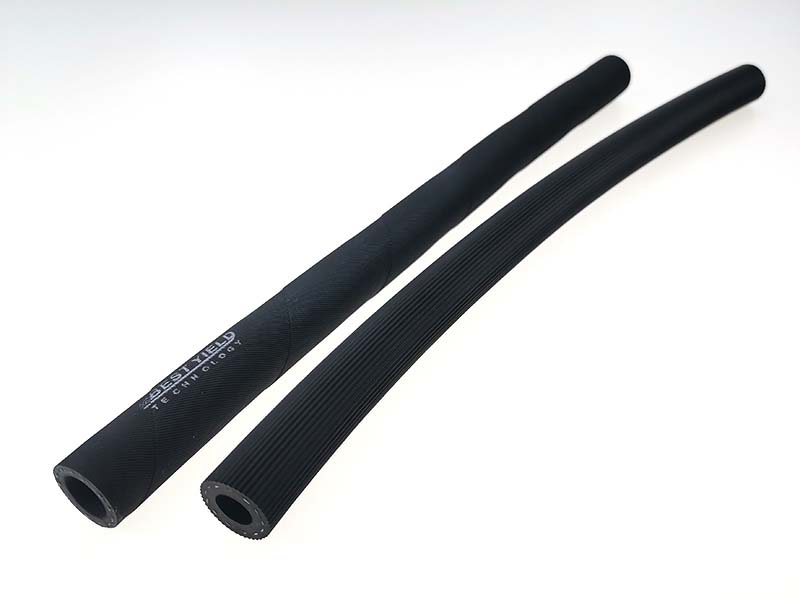
1. Do not twist the rubber hose during installation to avoid damage or loose connections when under pressure.
2. When the bending radius is too small, a more reasonable approach is to use a right angle joint to avoid sharp bending and twisting of the steel wire braided rubber hose.
3. When under pressure, the length of the rubber hose will change. If the stroke of the internal steel wire layer is large, the length will become shorter when under pressure. On the contrary, if the stroke is small, the length of the hose will become longer. Generally, products may have some errors, so it is inevitable that they will become longer or shorter. If there is a bend after installation, no fixing device should be added at the bend, and the hose should be allowed to move freely. Once fixed, it is easy to cause increased wear and tear on the buckle.
4. To avoid damage and flow restriction of steel wire braided rubber hoses, the bending radius should be increased as much as possible.
5. When installing rubber hoses between objects, corresponding space should be left to avoid friction between the hose and the object during operation. If it cannot be avoided, try to take some protective measures, such as using rubber hose sheaths.
The above are the installation requirements for steel wire braided rubber hoses. If there is an installation error, the hose will undergo significant deformation under slight pressure and is prone to corrosion. In addition, unreasonable design and poor processing quality of hose joints can also cause damage to the inner rubber. If the joint material is selected improperly, it is easy to deform during the crimping process, which affects the crimping quality and shortens the service life of the hose.